TM SHP Edition 1

I love a good Teachmeet!

We must have the biggest fringe session here. Lots of people and plenty of tweets on #TMSHP12

First up, Don Cumming recommending Rebel Girls by Jill Liddington and other texts which cover suffragettes in his local area. He then set up a wiki for students to add their own information about local suffragettes.

Now Emma Holness on active learning at ks5. Tying knots in pieces of string to show when rebellions happened – a stripped down timeline. Helped to understand the frequency of rebellions. Love this – so simple! Put playdough on maps to show size of rebellions.

Lesley Ann McDermott now on using PowerPoint to review learning. Different questions and sources on each slide which cycle through, pupil chooses when to stop. Also slides with all the exam questions on: weaker students do QA, stronger QC. Slide transition: set on auto, 000, and set loop til escape. Phenomenal resource! Want.

Martin Spafford next. Comiclife. Free downloadable version; allows students to make comic strips very quickly, improves literacy, gives the most able a tool to help them record. Helps them to make comparisons and the pictures help with retention. Setting a limit on the number of pictures allowed ramps up the challenge.

Luke Mayhew: his school’s centenary was yesterday and his students have done a project on its history. Found lots of stuff in school cupboards, including the record books. The local press got involved, which has led to stories coming in from old pupils. Interviews conducted at local retirement homes. Even managed to get a train named after the school!

End of part 1…
Posted in shp12 | Leave a comment

Workshop D

Don Cumming and Dan Lyndon: the Power of Two.

We begin with half a picture, handed to us on the way in. We have to find the other half and with this person, find the question to go with it and answer it. Pictures and questions are colour coded.

According to Vanilla Ice, collaboration is key. Darwin suggested that people who collaborate are slightly more involved. This session is about collaborating with other teachers to improve your teaching.

Dan and Don did some interschool blogging as part of their study of the slave trade. Students can comment on key questions that were set and were then able to feed back to each other. Then they wrote to English Heritage to ask for a blue plaque for Equiano, and marked each other’s letters. Don suggests teaming up with another school and starting with postcards.

Don then suggests adding Wikipedia entries: collaborating with the world, and then searching for historians to find more information.

Dan talks about using the TASC wheel, developed by Belle Wallace. Thinking Actively in a Social Context.

It’s based on the way the brain works. It looks quite similar to the TEEP cycle, I think.

Googledocs also good for collaboration: Dan has used it to discuss historiography with year 13 students. We also looked at Wikispaces. Inspired to read Jill Livingston: Rebel Girls. It’s not actually  Livingstone – that was autocorrect!

We did a carousel activity, looking at blogging to improve student writing, wikis to improve their research, podcasting and the TASC wheel.

I am reminded to join Dropbox.

Fab session! Lots of hands-on ideas I can use. 

Posted in shp12 | Leave a comment

SHP Fourth Plenary

Ben Walsh on the future of History teaching. Looking forward to reading his PhD on impact of tech in the classroom. He begins with a Dead Ringers send up of Schama. They’ve got the head bob right!

Review. Rhetoric. Relevance. Ben’s three Rs of dealing with the curriculum review. Why are certain views of school history so deeply entrenched? Why does the teaching of it cause so many arguments? There are no debates about Science: nobody cares!

It’s stupid to do things just to get a good data outcome at the end. Data should not drive what we do nor be our reason to do it. It’s not often that data tells us something we don’t already know.

image

Good cartoon from the Mirror, 1907. Not too unfamiliar. Reminds me of the comparison in chance between surgeons and teachers in the last century: teaching looks almost the same whereas surgery is virtually unrecognizable.

Markschemes should not be hoops and hurdles, but a hierarchy to reflect the responses students are giving and differentiate between them.

Ben recommends Prof Cannadine’s “The Right Kind of History” as a good reflection on History teaching over the last century. Gives a way on to the debate going on about school history and why we teach it.

image

Ben uses, as an example, the idea that the teaching of British history is declining in schools. Narrative dominants concentrate on the importance of the story, while concept dominants argue that critical thinking is the key and the knowledge is less important. There are issues with both. Whose narrative? How will they learn chronology?

Ben talks about signature pedagogies. People are used to teaching in a specific way and what’s taught isn’t what happens outside of schools. Why ask them to research what you’ve told them? Why use sources to show what they already know? We should be using them to help students to guess what is happening – to cover the bits the text book doesn’t cover.

How relevant is History? Two thirds of our students drop it at 14 – not necessarily because they didn’t enjoy it, but because they didn’t think it was relevant.

The importance of web literacy: example used again of Martin Luther King website created by Stormfront, and also Victorian Robots. Then Ben talked about comparative markers and history repeating itself, thereby making the study of it helpful for understanding current affairs. More relevance demonstrated by an interview with the producer of Assassins’ Creed on the importance of historians in the creation of their $60 million development. Nobody ever wrote a video game about titrations…

History also demonstrates how knowledge changes – we find out more and opinions change.

Ben recommends Corbis as a photo search engine: give students an alternative to Google.

image

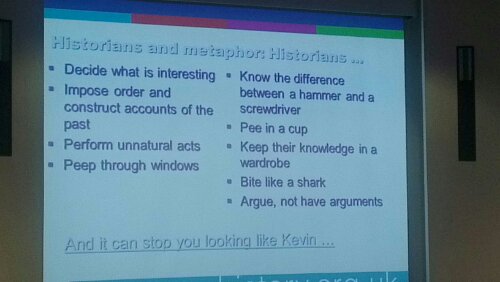
Flaubert: “Writing History is like drinking an ocean and peeing a cupful.” Historical knowledge is like a wardrobe – you don’t wear everything at once, so don’t put all your knowledge into one answer.

We finish with the excellent clip of Kevin on Hardball, trying to explain appeasement. Ben says he never tires of watching the clip and I agree!

Posted in shp12 | Leave a comment

Workshop B

Diana Laffin: Improving Writing at A-level.

We begin with choral music and a consideration of the fates of 3 prominent Catholics/Jesuit sympathisers in 1606. One of them composed the music – Ave Verum Corpus by William Byrd. Good story of Luisa de Carvajal, who was a Jesuit missionary who used to dig up martyred Catholic priests and sell their bones as relics. She wanted to be a martyr. Interested to read her letters, they sound gruesome! Arrested twice, the second time they did a dawn raid and was imprisoned and deported. She wasn’t martyred but was beatified and has an Airbus named after her.

This hook points out that sixth form still need the stories and the people, because often A-level courses have removed these. Reminds me of the Italian faux lesbian from the 1930s Diana talked about a few years ago – one of the few stories I have for the y12 course I teach.

Diana shares a letter from her dad, who wrote home concerned about the growing power of Russia to bring home the importance of the personal connection.

Is Andrew Marr an historian? We discuss what an historian is. Someone who does their own research? Who expresses an opinion? We read and compare extracts from Marr’s History of Modern Britain, and the relevant Kynaston text, and then critique some other books, judging whether we would recommend them to students. Historical  fiction – good for a sense of period but with the proviso that it needs to be unpicked. Diana suggests a moodle book forum with students reviewing books and explaining how they are useful for background/wider reading. Staff add theirs too. This would be a good cross-curricular literacy project.

Now we look at some extracts from Allison Weir and Panikos Panayi and unpick their historical writing habits. Panayi differentiates between different social groups in his conclusion – good modelling for students. Also quite cautious, where sixth formers are often naively decisive. Is the instruction “Write a conclusion” limiting? Should it be “Write a series of supported judgments”?

Students looked at the habits of historians and created a crib sheet which they then used to help them write their essays through the year. This would be a good study-skills exercise for the start of y12.

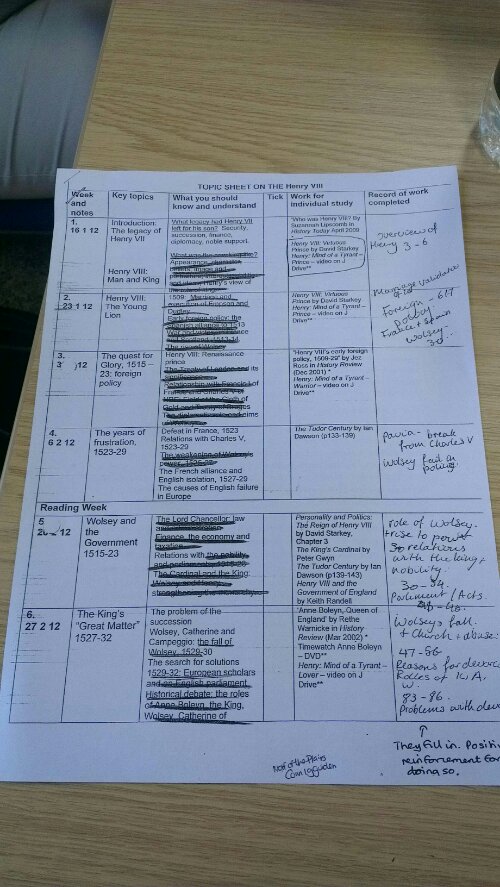
We looked at the topic review sheet Diana uses, and she says that she uses masses of positive reinforcement for students who fill it in. She says this has worked better than anything else she’s done as she gives students who have read 1-to-1 attention and this really encourages them to read more.

image

Diana ran a value added project where she worked with students who had achieved unusually highly at AS. She used questionnaires and mini interviews to identify their six main habits, which were then shared with other students. Strict routines and rituals were common. They regarded their success to be directly related to their hard work. Very similar to what Carol Dweck says in “Mindset”.

image

Behind the head are the words “what they” 🙂

Posted in shp12 | Leave a comment

SHP Second Plenary

Andrew Wrenn on Growing Remembrance: Designing the Future.

We begin by discussing recent headlines. We look at pictures of servicemen from Afghanistan, and you could hear a pin drop. 1968 is the only year post WW2 that a British serviceman has not died in combat. This session focuses on post-war conflicts involving British forces.

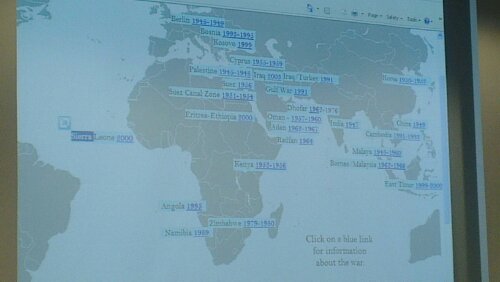
We list post-ww2 conflicts involving British troops and try to group them – decolonisation, peace keeping, alliances…

image

…keeping colonies, sometimes – “imperial policing”. Oil, economics. “Resisting aggression”. Cold War. Humanitarian.

There are a lot of wars on this map and audience hands-up suggests very few of them are covered in schools today. Students have a gap in their knowledge and don’t understand how British troops have been used and affected post-1945.

The scheme of work presented is about how post-1945 conflicts should be remembered – because at the moment they aren’t, really.

We read about Korea. Helpful – year 12 are just doing this in prep for next year 🙂
Then we discussed what would be an appropriate memorial for the 686 dead, 1102 MIA British troops. This is how year 9 would begin with a conflict of their choosing. We look at some other memorials.

image

A memorial is a representation in a place, and where it is placed and how you interact with it is as important as what it is. The one above is in San Francisco on the coast, the figure looking out over the Pacific.

Andrew tells us about a memorial walk students go on around London. He shows a short video of the monument to NZ soldiers at Hyde Park Corner. It has Maori language and cultural references included. But to critique the monument, you need to know your History well. The D&T dept helped with this, with the model making.

(Thinking I could do the memorial walk and make videos of each one for students to view as part of the project. Sounds like a good summer day trip!)

On video, year 9 student Felix presents his memorial to the Korean War. Shows excellent historical knowledge and distillation of understanding.

Finally Andrew tells us about the National Memorial Arboretum in Staffs. Memorials here are created by veterans associations and students visited to critique what is there.

Excellent ideas here! http://www.growingremembrance.org.uk

Posted in shp12 | Leave a comment

SHP First Plenary

Neil Bates and Richard McFahn on GCSE History. Their hook is a mystery object table – all objects related to Suffragettes. Neil suggests having a box o’crap for every GCSE unit. I can hear my HoD gasping in horror.

Do lessons get boring at GCSE? Too repetitive? We looked at some principles for planning high quality enquiries that have been proved to work across the curriculum.

Picture time! A Canada goose, a microchip, a flaming Korean jet. All connected with near-nuclear war. Enquiry: was the Cuban Missile Crisis the closest the world has come to nuclear war? We looked at cards with various events on and created a living timeline of how serious those events were. Much hilarity that the diminuitive stature of the lady holding the Cuba card meant it was not as serious as the events adjacent to it.

Moving on the drawing something you can’t see based on your partner’s description. Richard says an Ofsted inspector saw this lesson activity and said it was excellent literacy work. The picture we used here was a pre-WW2 German poster; students were instructed to create an audio guide for this source (love this….will do this with year 10 on Tuesday).

image

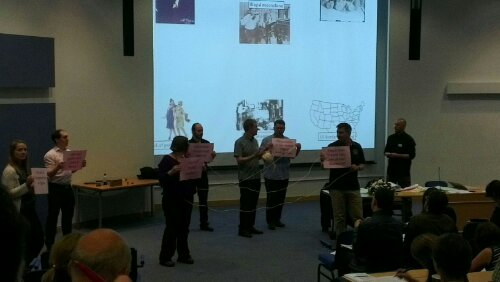
Similar to the audio guide, students could write a voiceover for a piece of silent film. We looked at the reasons why prohibition failed and connections were made between the causes using pieces of string to connect people holding causes.

image

Curiosity is at the heart of SHP, as is enjoyment. Remember that when planning GCSE lessons!

Posted in shp12 | Leave a comment

Student feedback

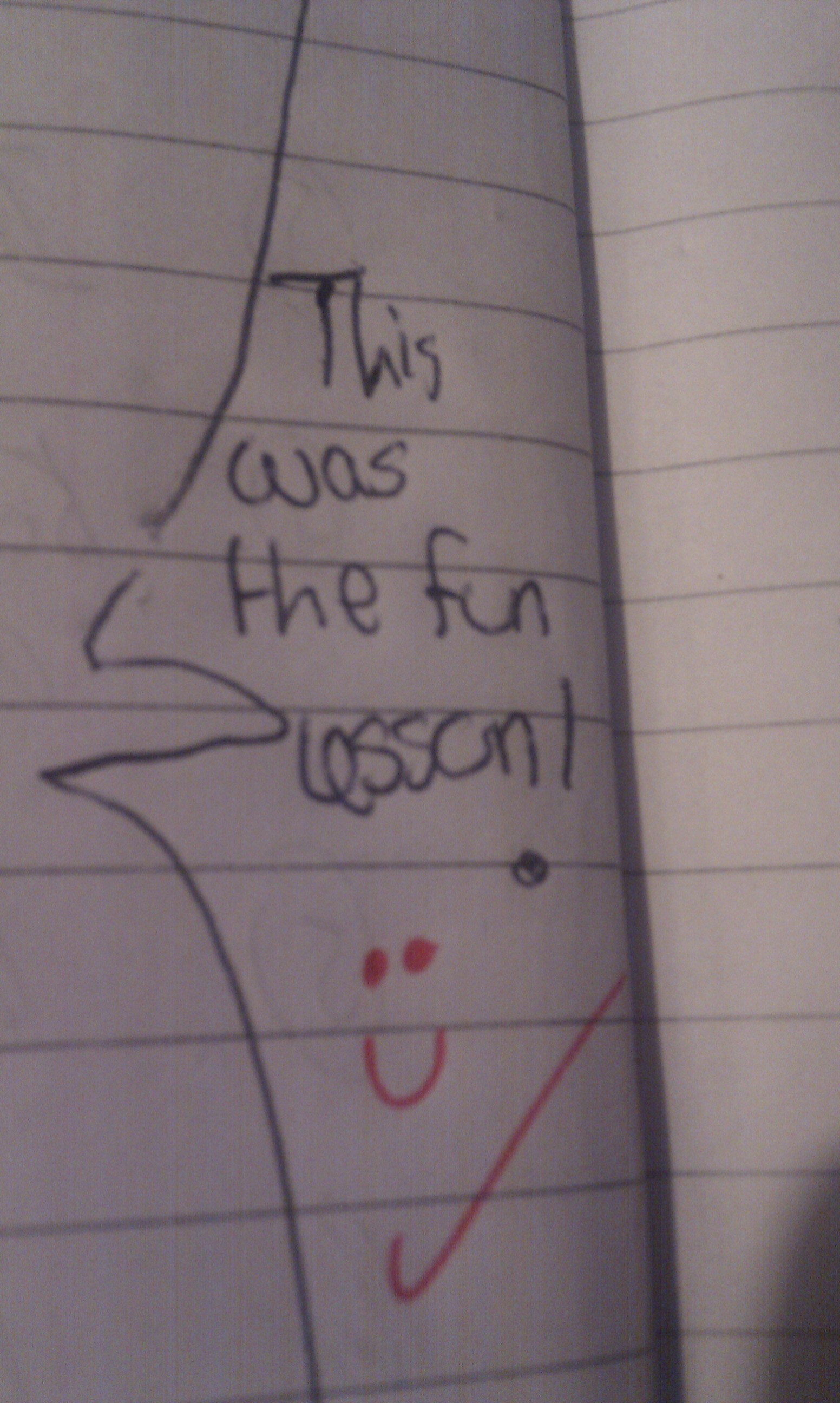
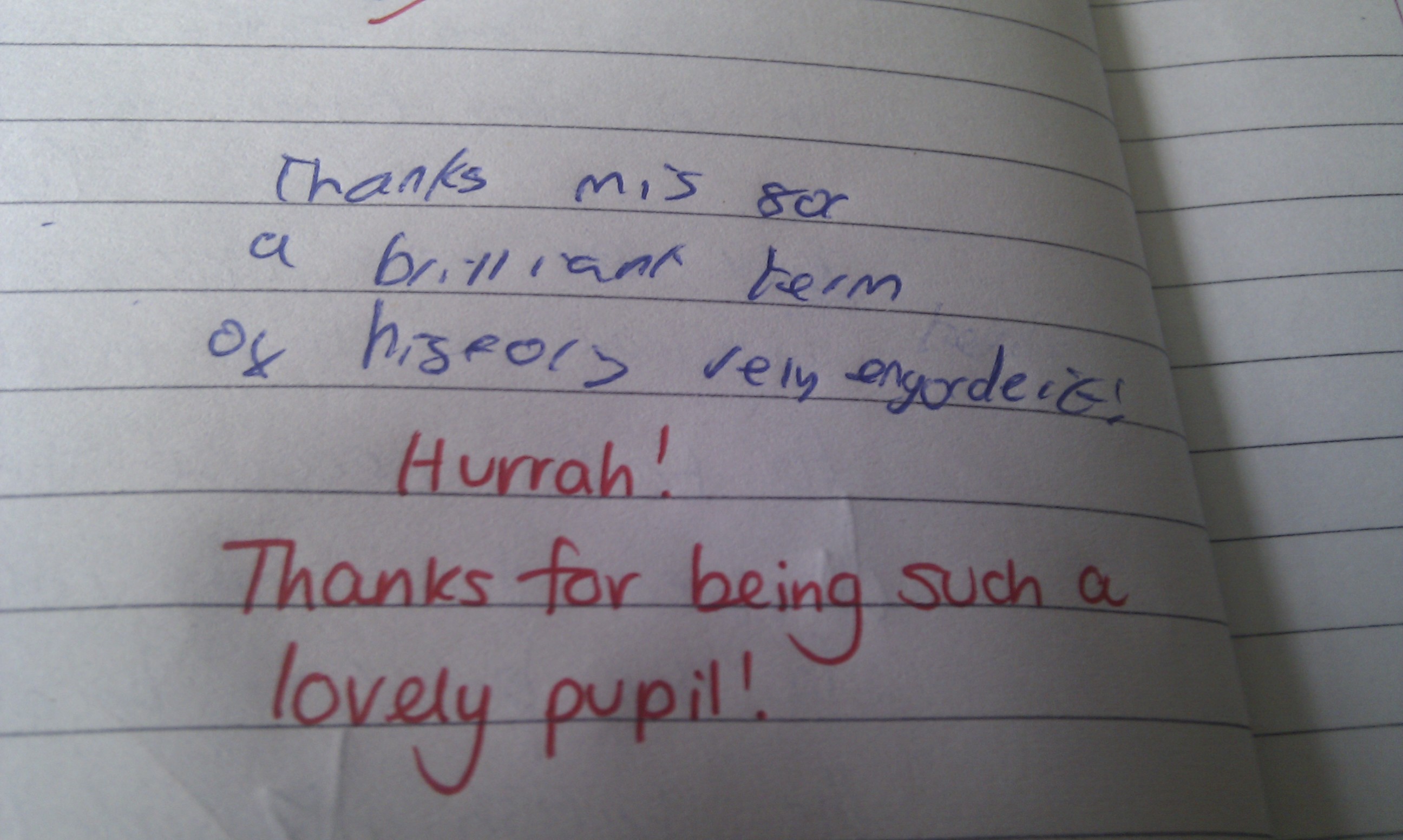
It seems only fair, having blogged about feedback twice this week, that I share a couple of nice comments from students. I found these in books I was marking towards the end of last term. I know that it is pure vanity to share these because they aren’t actually helping the student, but it is always nice to come across something like this, particularly towards the end of a set.

I have been looking back over the Sutton Trust report on strategies to improve progress and their ideas about AfL struck a chord with me today. I think I will tweak my assessment sheets accordingly next year: students should be using the success criteria from the assessment to set themselves next step targets, while I concentrate on writing about what they’ve improved on from last time. This will hopefully make their interaction more meaningful – if a little less heart-warming for me!

Posted in AfL | Leave a comment

New Marking Methods #2

This was for KS3. I had a go, in February, at an oral assessment with my year 9s for the Holocaust. I used this blog post as my inspiration and Richard was kind enough to look over some of my class materials for me ahead of time. It went so well my HoD deemed my lesson outstanding, which was a nice feeling.

I repeated the experiment with year 8, to complete their Empire assessments last term. I ran it along the same lines – some students opted for the debate and some for the essay; the debate was a little more awkward than with the year 9s, as they were all a bit nervous. However, it worked well.

When I did the Holocaust assessment, I drafted in year 12 helpers who recorded the assessments on iPods and then I watched them back in my own time to check on the levels the students awarded; this time I supervised the debates personally and made notes on the students as I went. I was then left with the prospect of copying my notes long-hand into student books as feedback.

So, instead, I decided to use an iPod to give my feedback orally. I used my Diary Room cupboard to complete the recordings on an iPod, which I then passed around to students at the start of the next lesson. They had to listen to the feedback on earphones, and write in their books the level they go, what they did well and what they needed to do to improve.

This worked like a dream. The novelty of using the iPod meant that the students engaged with their feedback far better than if I had written it into their exercise books for them. I will definitely be doing this again in the future.

Here is one of the videos…now, you mustn’t tease. The name is written backwards. This is because when you’re filming forwards on an iPod, it films in mirror but converts to normal when you stop filming. I realised this AFTER I had filmed all the feedback. For each student, I painstakingly wrote their name on a mini whiteboard in mirror writing so that it would be readable on the recording. Utter technology #fail. The students found this hilarious.

(For some reason the synching is all out of kilter too, but hopefully you get the idea).

Posted in AfL, Reflections | Leave a comment

New Marking Methods #1

I have been trying out some new assessment methods with my classes in the last couple of terms. This is partly a result of changes in the way I have taught some things, and partly due to wanting my feedback to be more focused and more interactive for my pupils.

Firstly, I adjusted the way I am teaching Crime and Punishment Through Time to my year 10s this year. Inspired by Colin Sheppard’s feedback meeting I attended in November, I am teaching the course thematically instead of chronologically: Crime, then Punishment, then Policing/Courts, and finally Protest. I’ve always taught Protest as a separate unit at the end, it works best; and I am finding the rest of it works better, too. I am convinced they have a better handle on the chronology of the whole period.

Jumping back and forth between time periods meant I chose folders for them to work in for this unit. They quite like it. I remember being a GCSE student at school: acquiring myself a new folder, painstakingly adorned with pictures I had cut out of magazines, and then feeling a bit let down when I had no notes to put in it. I think my students now might feel similar: they have certainly responded well to the change.

It’s a bit harder to mark a folder, though. The feedback might be squeezed on a piece of file paper which doesn’t come at the end of the work. It’s difficult to look back at targets and so on.

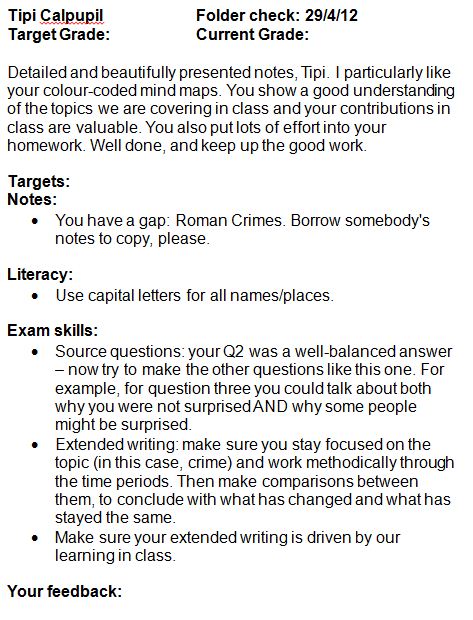
So, I have started doing this instead:

I complete one of these for each student, each new term. I go through the folder, reading the notes and initialling each page as I do. I am a speedy typist and the above would take me less than five minutes once I had read all the new notes. As well as this I give them more specific feedback on assessment tasks, using a student-friendly version of the markscheme, which they also keep in their folder; so the exam technique section of this sheet is a recap of the targets from those.

This has gone down well. I have had some good feedback from students on the bottom of the sheet, and some positive comments about the new way of doing things.

More adventures in feedback tomorrow. I am newly committed to regular blogging but my time is up for today! I also have five more folders to get through….

Posted in AfL, Reflections | Leave a comment

Learning on the Loo

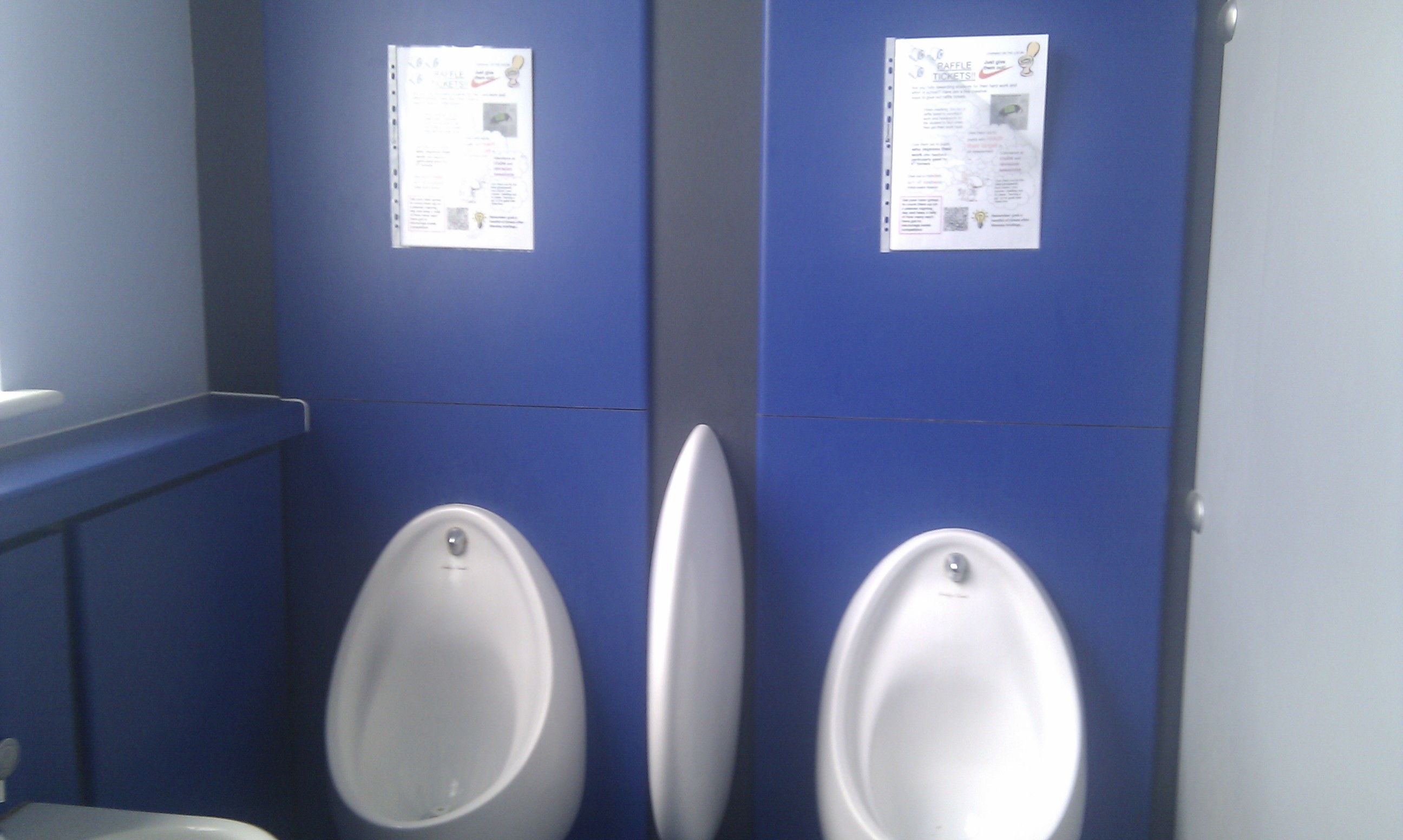
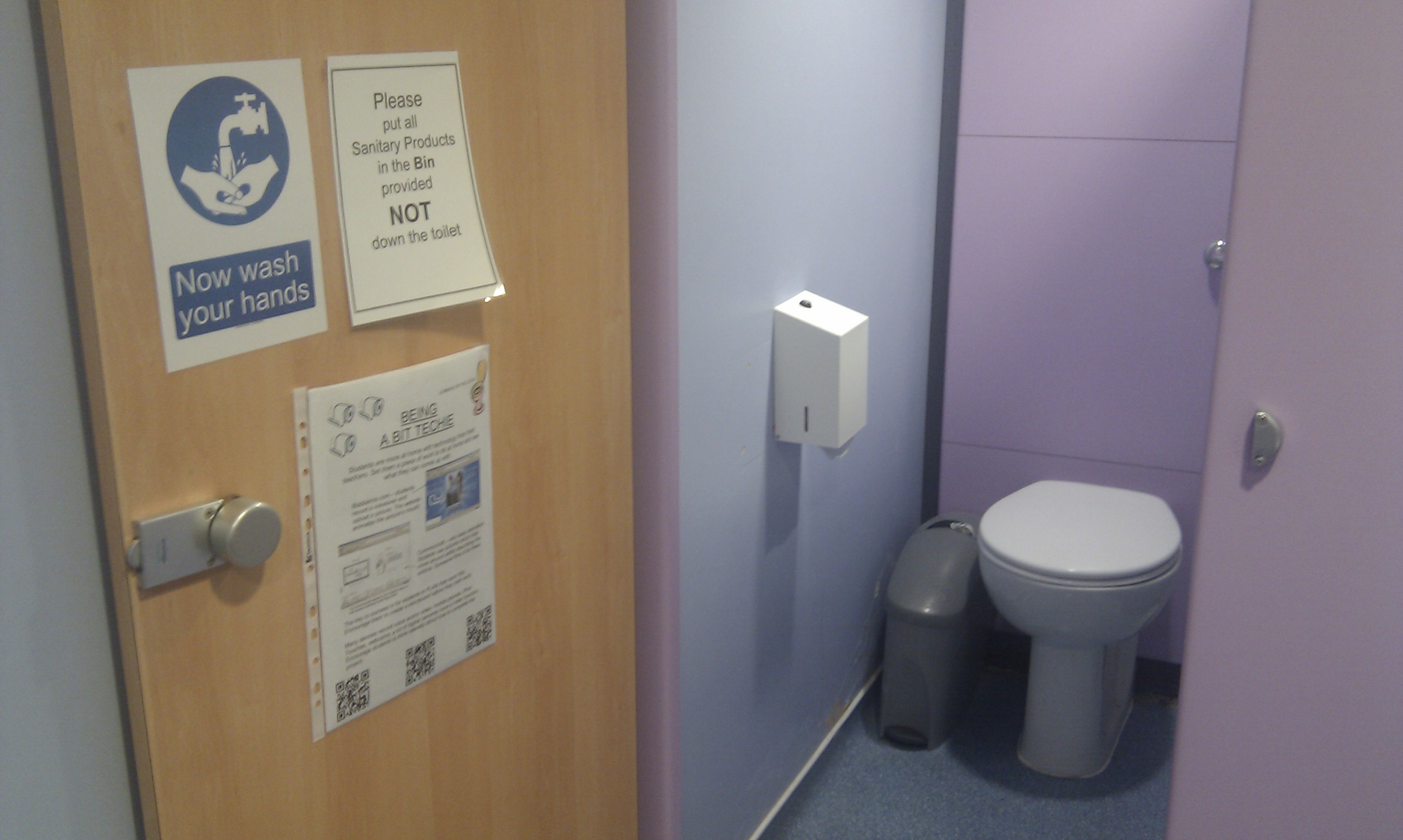
I mentioned in my to-do list for this year that Learning on the Loo was something I really wanted to get off the ground, since it was on my to-do list last year and I never got round to it. Pinched, as all the best ideas are, it simply involves creating an information sheet about something or other and putting it on the wall in the toilets for people to read whilst they are answering the call of nature. They had it on the toilet walls at the Google HQ when I visited in 2010 (though not, I was sorry to see, in 2011).

Image

(Don’t worry – they’d literally just been cleaned and I did knock first)

I was a bit subversive with this to begin with: I just did it. We had a new photocopier which had the capability to scan and so I created a how-to sheet and stuck it up. It was fun to watch people buzzing with it a bit because not many people knew it was me. My aim was to replace them every fortnight but, naturally, this turned out to be a bit ambitious and I have settled for creating new ones when the inspiration strikes.

Image

(Just realised we have lavender for the ladies and blue for the gents. #cliche)

The latest edition is to encourage staff to hand out more rewards to students, at the request of the lovely Cara, who launched the new reward raffle tickets this year. The last one was a follow-up to a Teaching and Learning breakfast at which the head of IT had shared Blabberize and Commoncraft. Quite a few of these got stolen out of their plastic wallets which I was flattered by. I think that definitely suggests they are having an impact; and one of our governors commented on how much he liked them at a meeting last term, which was nice feedback too.

It’s very low tech but a nice way of sharing. I have uploaded my LOTLs for you to have a closer look at, with two comments from me: firstly, number 3 is deliberately missing because it had identifiable student work on it; and in number 2, my arrow was actually stuck in the moon on the real thing, and not coasting ironically along the bottom. I think it was lost in translation when I opened the file in OpenOffice. C’est la vie.

Posted in wins | 2 Comments